Urbanization is transforming the world at an unprecedented pace. In 1900, only 13% of humans lived in cities.
In 2025, the number has surpassed 57%, and the expansion is far from over. Today’s megacities are not just urban centers — they are economic engines, migration magnets, and living ecosystems that define our collective future.
This deep-dive explores the Top 10 most populous cities in the world (2025), the forces shaping their explosive growth, the challenges they face, and how they are reshaping global power in the 21st century.
INTRODUCTION: The Age of the Megacity
Megacities — officially defined as urban areas with more than 10 million inhabitants — barely existed a century ago.
In 1950, there were only 2 such cities: New York and Tokyo.
In 2025, there are over 40, and the top 10 alone hold more than 300 million people.
What’s driving this explosion?
- Economic opportunity
- Rural-to-urban migration
- Birth rate momentum in developing countries
- Globalization and infrastructure growth
- Technology clusters and industrial hubs
- Cultural magnetism and global soft power
The center of gravity of global population has shifted to Asia, which now hosts 8 of the 10 largest cities on Earth.
Let’s explore each megacity, its origins, its rise, and what its future looks like.
🥇 1. Jakarta, Indonesia — ~42 Million (World’s Largest Metro Area)
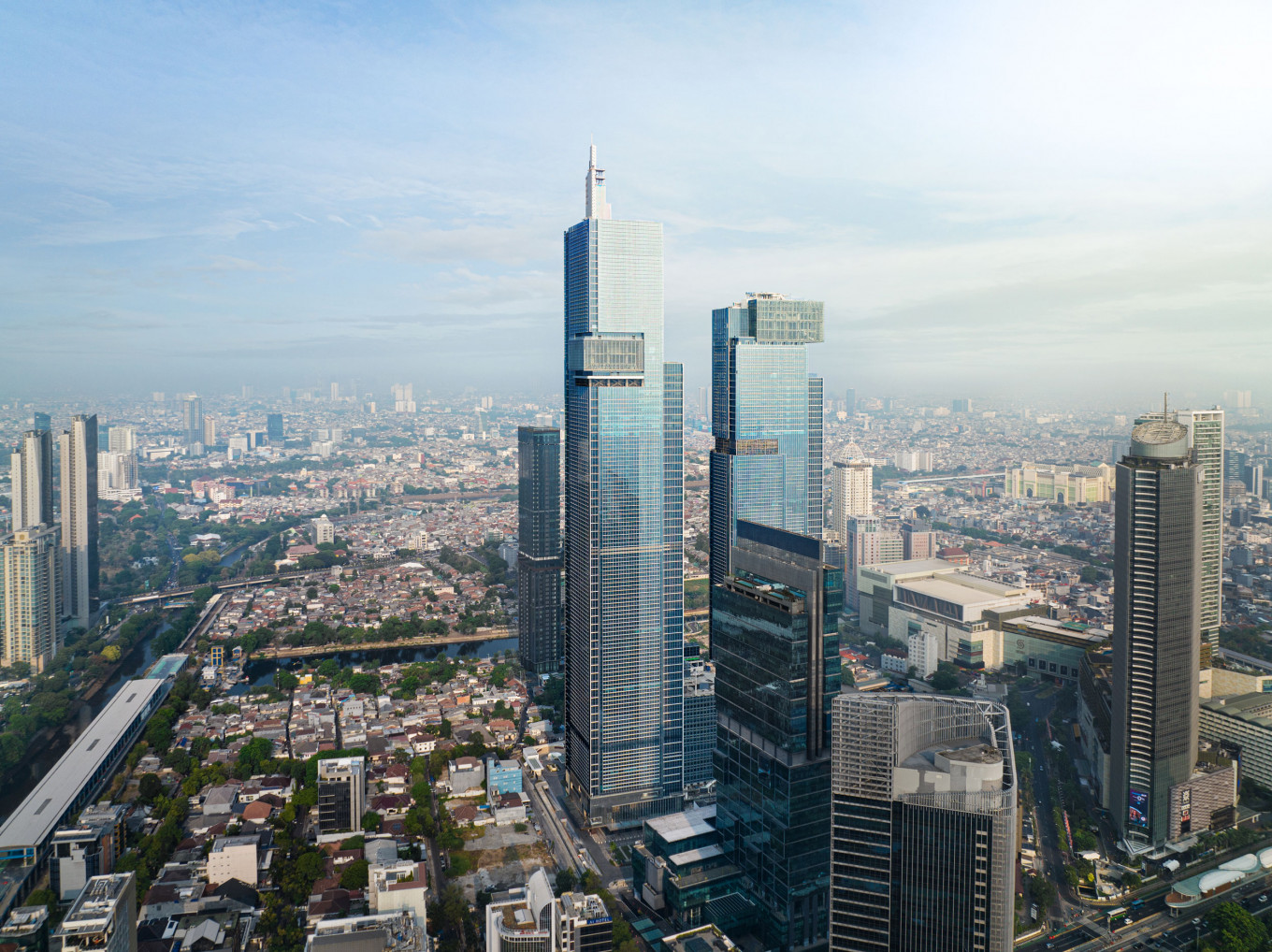

In 2025, Jakarta surpasses Tokyo as the largest megacity in the world, with an estimated 42 million people in its metropolitan region.
🌟 Why Jakarta Exploded in Population
Jakarta’s rise is the result of:
- Mass internal migration from across Indonesia’s 17,000+ islands
- The booming tech-finance-manufacturing triangle
- Rapid suburbanization in areas like Bekasi, Tangerang, Depok
- A young demographic (median age ~29)
- A massive informal economy
The city’s density and complexity resemble a living organism — chaotic, vibrant, evolving.
⚠️ Key Challenges
- Severe flooding and land subsidence
- Intense traffic congestion
- Extreme pollution
- Overloaded infrastructure
These pressures are so intense that Indonesia is building a new capital, Nusantara, to relieve Jakarta’s burden — but the megacity continues to grow regardless.
🔮 Jakarta’s Future
Jakarta will remain a Southeast Asian super-hub, even if political power shifts elsewhere. Its population may peak above 45 million by 2040.
🥈 2. Dhaka, Bangladesh — ~36–37 Million


Dhaka is the fastest-growing megacity on Earth, often described as “the densest major city in the world.”
🌟 The Forces Behind Dhaka’s Growth
- Bangladesh’s textile and garment industry, ranked among the world’s largest
- Huge waves of rural migration
- Economic progress lifting millions into the middle class
- A very young population
Some districts reach 50,000 people per km², creating an unparalleled urban density.
⚠️ Dhaka’s Challenges
- Traffic congestion ranked among the worst worldwide
- Pollution and waste management crises
- Vulnerability to climate change
- Limited green areas
Yet Dhaka remains resilient, driven by human energy, industry, and ambition.
🔮 Dhaka’s Future
If growth continues, Dhaka could reach 45+ million by 2040, potentially overtaking Jakarta.
🥉 3. Tokyo, Japan — ~33–37 Million


For decades, Tokyo was the world’s largest city, and even after falling to #3, it remains an icon of global urban excellence.
🌟 Why Tokyo Became a Global Giant
- Post-war economic miracle
- Hyper-efficient public transportation
- World-leading tech and robotics
- Strong service and finance sectors
- High urban consolidation and vertical growth
Tokyo represents the pinnacle of orderly megacity design — clean, safe, efficient, futuristic.
⚠️ Tokyo’s Current Challenge
Japan’s population is shrinking and aging rapidly.
Tokyo remains huge, but its long-term trajectory is downward.
🔮 Tokyo’s Future
Still a global leader, but its population will likely decline slowly by mid-century.
4. Delhi, India — ~30–35 Million

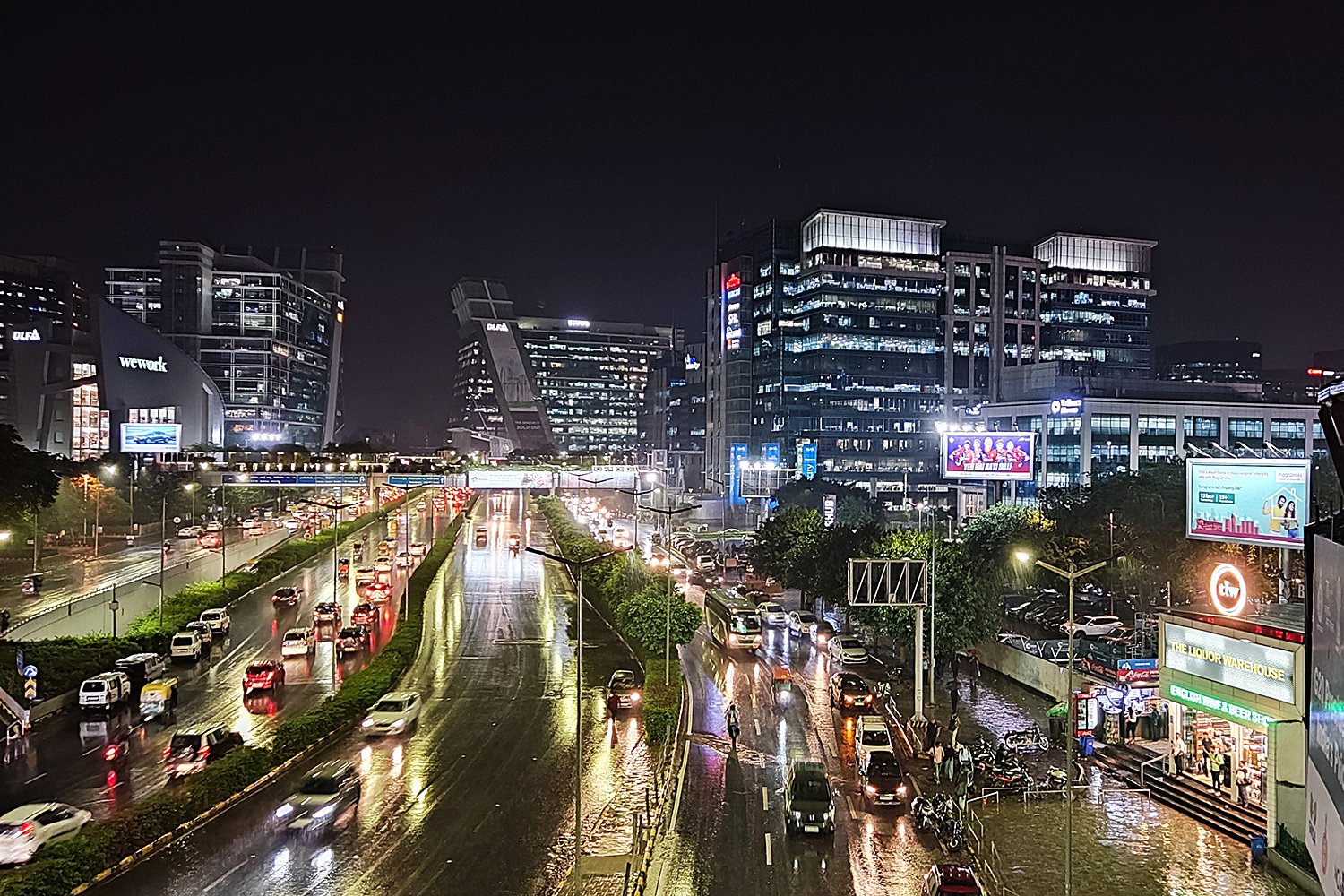
Delhi is one of the world’s most vibrant and complex megacities — a vast merging of history, culture, and explosive modern expansion.
🌟 Drivers of Delhi’s Growth
- Constant rural migration
- Expanding tech, manufacturing, and service sectors
- Growing suburbs (Gurgaon, Noida, Ghaziabad)
- High birth rate and young population
Delhi has become a subcontinental giant, stretching across multiple states.
⚠️ Challenges
- Severe air pollution
- Traffic congestion
- Water scarcity
- Heatwaves amplified by climate change
🔮 Delhi’s Future
Delhi could rival Jakarta and Dhaka by 2050, approaching 45–50 million inhabitants.
5. Shanghai, China — ~30 Million


Shanghai is the economic engine of China, a symbol of rapid development and architectural ambition.
🌟 Why Shanghai Became a Megacity
- Explosive manufacturing growth
- Global finance center in Pudong
- World’s busiest container port
- Huge internal migration
- Cutting-edge tech initiatives
It blends tradition (The Bund) with futuristic skylines (Pudong) like no other city.
⚠️ Shanghai’s Challenges
- Rising living costs
- Pollution
- Pressure on housing
- Slower population growth due to China’s demographic transition
🔮 Shanghai’s Future
Still expanding but at a slower rate.
Its influence — economic, cultural, political — will remain global.
6. Cairo, Egypt — ~23–25 Million


Africa’s largest city blends ancient millennia-old history with rapid, sprawling modern growth.
🌟 Cairo’s Growth Factors
- High national birth rate
- Urban migration from rural Egypt
- Economic centralization
- Massive suburban expansion (New Cairo, 6th of October City)
Cairo is a megacity suspended between the pharaonic past and modern megaregion future.
⚠️ Challenges
- Traffic and infrastructure strain
- Pollution
- Housing shortages
🔮 Cairo’s Future
Egypt’s population will continue growing, pushing Cairo to 30+ million by mid-century.
7. São Paulo, Brazil — ~22–23 Million

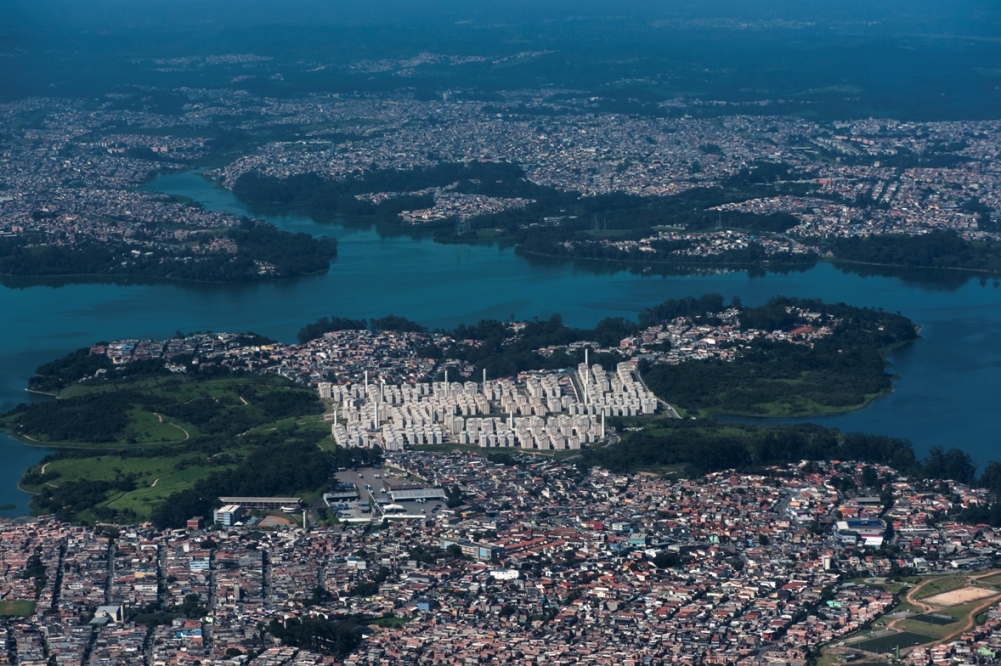
São Paulo is the largest city in the Western Hemisphere — a sprawling, energetic mega-metropolis.
🌟 What Fueled São Paulo’s Rise
- Latin America’s strongest finance hub
- Manufacturing, services, and entertainment industries
- Heavy migration from across Brazil
- Diverse, multicultural population
São Paulo is the economic heart of South America.
⚠️ Challenges
- Inequality and favelas
- Congestion
- Crime
- Strained infrastructure
🔮 São Paulo’s Future
Growth is stabilizing, but influence is rising.
8. Mexico City, Mexico — ~22.7 Million


Built atop the ruins of ancient Tenochtitlán, Mexico City is a mega-metropolis full of culture, history, and rapid modern expansion.
🌟 Growth Factors
- Centralization of national power
- Massive metro system
- Cultural and economic influence across North America
- Suburban growth in Estado de México
⚠️ Challenges
- Air pollution
- Earthquake vulnerability
- Water scarcity (built on a former lake)
🔮 Mexico City’s Future
Population may plateau but densification will continue.
9. Beijing, China — ~22.6 Million


Beijing is China’s political center and one of the world’s most influential capitals.
🌟 Beijing’s Rise
- Strong manufacturing and tech sectors
- Massive suburban expansion
- Huge governmental presence
- Rich cultural heritage
⚠️ Key Challenges
- Smog and air quality
- Housing pressure
- Water shortages
🔮 Beijing’s Future
Likely to stabilize around 22–25 million.
10. Mumbai, India — ~22 Million
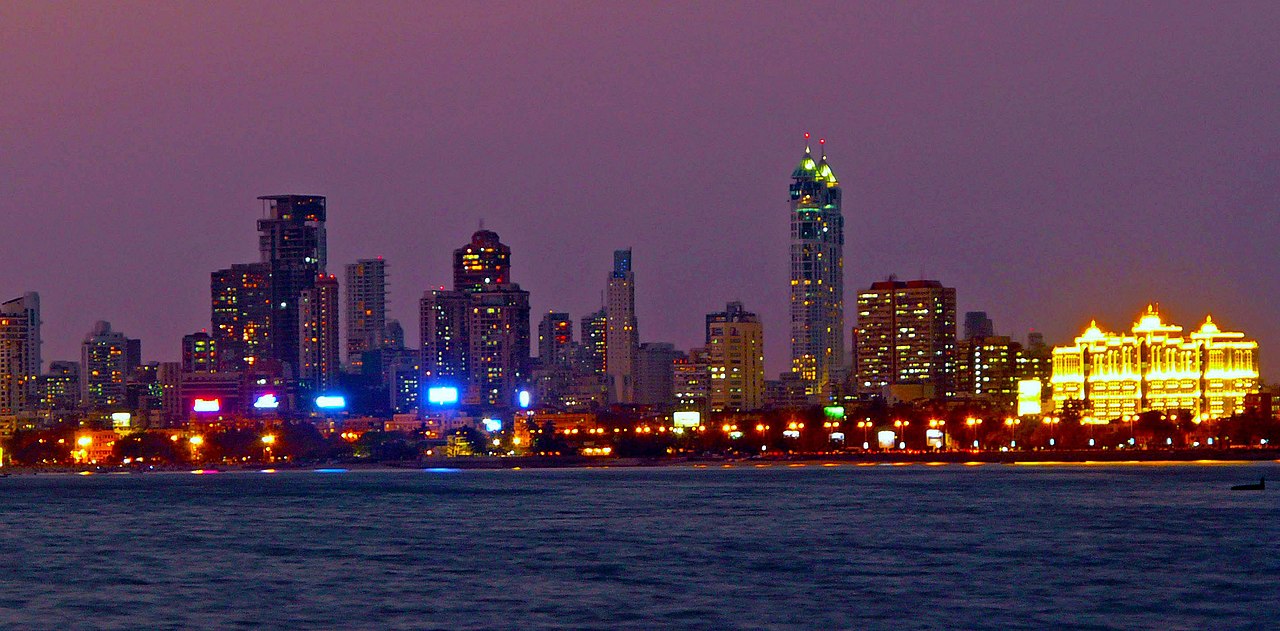

Mumbai is India’s financial capital and the home of Bollywood, with extreme density and immense cultural gravity.
🌟 Why Mumbai Grew So Fast
- Financial sector dominance
- Entertainment industry (Bollywood)
- Port activity
- Internal migration
- Young demographic
Mumbai is one of the most intensely populated places on Earth.
⚠️ Mumbai’s Challenges
- Slums and informal settlements
- Flooding during monsoon
- High inequality
- Rising real-estate prices
🔮 Mumbai’s Future
Expected to reach 28–30 million by 2050.
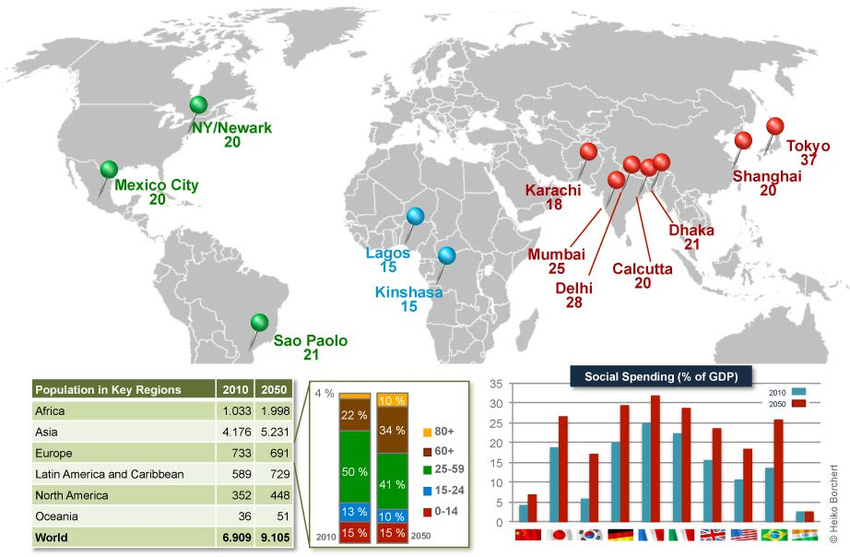
🌐 MEGACITY MAP: WHERE THE WORLD LIVES


Asia dominates global population patterns:
- 8 out of the top 10 cities
- Fastest-growing urban regions
- Youngest populations
- Largest migration flows
The future of humanity is increasingly Asian and urban.
📈 THE FUTURE OF MEGACITIES (2025–2050)
By 2050:
- The world will add 2.2 billion more city dwellers
- New megacities will emerge in Africa (Lagos, Kinshasa)
- India will add multiple megacities beyond Delhi and Mumbai
- Infrastructure, climate adaptation, and housing will become urgent global priorities
Megacities will define:
- Economics
- Culture
- Politics
- Technology
- Human identity
We are entering the age of hyper-urban civilization.