Around the world, people are living longer than ever before. Extended longevity brings extraordinary opportunities—more years to learn, work, travel, and enjoy life—but it also introduces new challenges. As the body ages, physical changes are inevitable: reduced strength, slower reflexes, and decreased mobility. Yet the most concerning changes often occur inside the brain. Many older adults struggle with memory lapses, reduced attention, slower thinking, and difficulties managing everyday tasks.
But here’s the question that scientists have been obsessed with for decades:
Why do some people stay mentally sharp deep into old age while others decline much faster?
A surprising answer is emerging from neuroscience and cognitive psychology:
Speaking multiple languages may help slow brain aging.
Why Multilingualism Acts Like a Workout for the Brain
When someone speaks two or more languages, all of them remain active in the mind at the same time. The brain must constantly choose the correct language, suppress the others, switch between linguistic systems, and adapt to context.
This process is not passive—it’s mental weightlifting.
Every time your brain:
- selects one language,
- inhibits another,
- or switches between vocabularies,
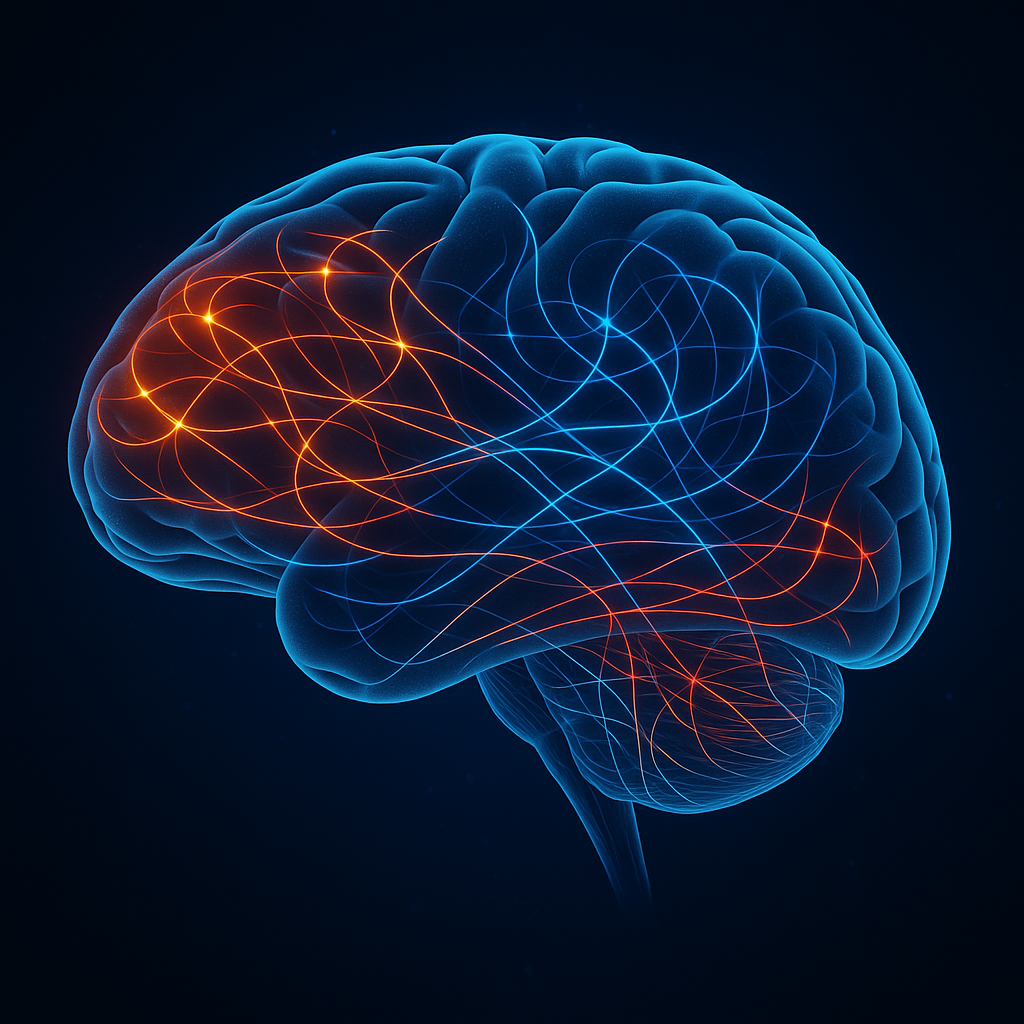
…it activates neural networks responsible for attention, executive control, and cognitive flexibility. These are the very functions that typically weaken with age.
Over time, this daily “exercise” may strengthen brain circuits and build cognitive reserve, a kind of neurological protection that helps the mind stay younger for longer.
So what can you do today to slow down brain aging?
Start learning a new language — it’s one of the most powerful mental anti-aging tools.
What the Research Says: Bilingual Brains Age Differently
For years, studies comparing monolingual and bilingual individuals have produced mixed results.
Some showed clear cognitive advantages for multilingual speakers, while others found minimal differences.
Now, a new and much larger study is helping to settle the debate.
A study of over 86,000 adults provides strong evidence that multilingualism protects the brain.
Researchers analyzed data from 86,000 healthy adults aged 51–90, across 27 European countries. Using a machine-learning model, they estimated each person’s “apparent age” based on:
- memory and attention performance,
- daily functioning,
- educational level,
- mobility,
- health conditions such as heart disease or hearing loss.
The results were published in Nature Aging, one of the world’s leading scientific journals.
The key metric was the “biobehavioral gap.”
- A negative gap meant the person appeared biologically younger.
- A positive gap suggested accelerated aging.
Countries With High Multilingualism Age Better
The researchers also ranked each country by the prevalence of multilingualism.
Here’s what they found:
Most multilingual countries:
- Luxembourg
- The Netherlands
- Finland
- Malta
Least multilingual countries:
- United Kingdom
- Hungary
- Romania
The results were striking:
People living in multilingual environments were significantly less likely to show signs of accelerated aging.
Monolingual individuals, by contrast, were more likely to appear biologically older than their chronological age.
Even speaking one extra language had a clear benefit.
And each additional language further strengthened the protective effect.
These benefits were especially visible in adults in their 70s and 80s, suggesting that multilingualism offers long-term resilience against age-related cognitive decline.
To rule out country-level differences, the researchers controlled for:
- air quality
- gender inequalities
- migration
- socioeconomic factors
- political context
Even after adjusting for all these variables, the effect of multilingualism remained strong.
The conclusion is clear:
Language experience matters. It shapes the brain. And it protects it.
How Multilingualism Protects the Brain: The Biological Mechanism
Although the study did not directly measure brain activity, previous research offers compelling clues.
Managing multiple languages engages the brain’s executive control system, which includes:
- the prefrontal cortex (decision-making)
- the anterior cingulate cortex (attention)
- the hippocampus (memory)
In fact, imaging studies show that lifelong bilinguals tend to have:
- a larger hippocampus,
- stronger white matter connections,
- and better preservation of brain volume in old age.
A larger hippocampus is associated with:
- improved memory,
- faster learning,
- and greater resistance to aging-related shrinkage and Alzheimer’s disease.
In other words, multilingualism does not work like a miracle drug — it works like long-term fitness for the mind.
A Simple, Accessible, Daily Habit to Keep the Brain Young
This new study stands out because of its massive scale, long age range, and advanced machine-learning approach.
By integrating biological, behavioral, and environmental data, it reveals a consistent pattern:
Multilingualism is strongly linked to healthier, slower brain aging.
It won’t reverse aging, and it’s not a magic cure.
But it is one of those powerful, everyday habits that keeps the brain:
- flexible,
- resilient,
- adaptable,
- and biologically younger.
And most importantly:
It’s never too late to start. Adults of any age can benefit.