Heart Attacks Could Be Infectious: The Discovery That Could Change Medicine
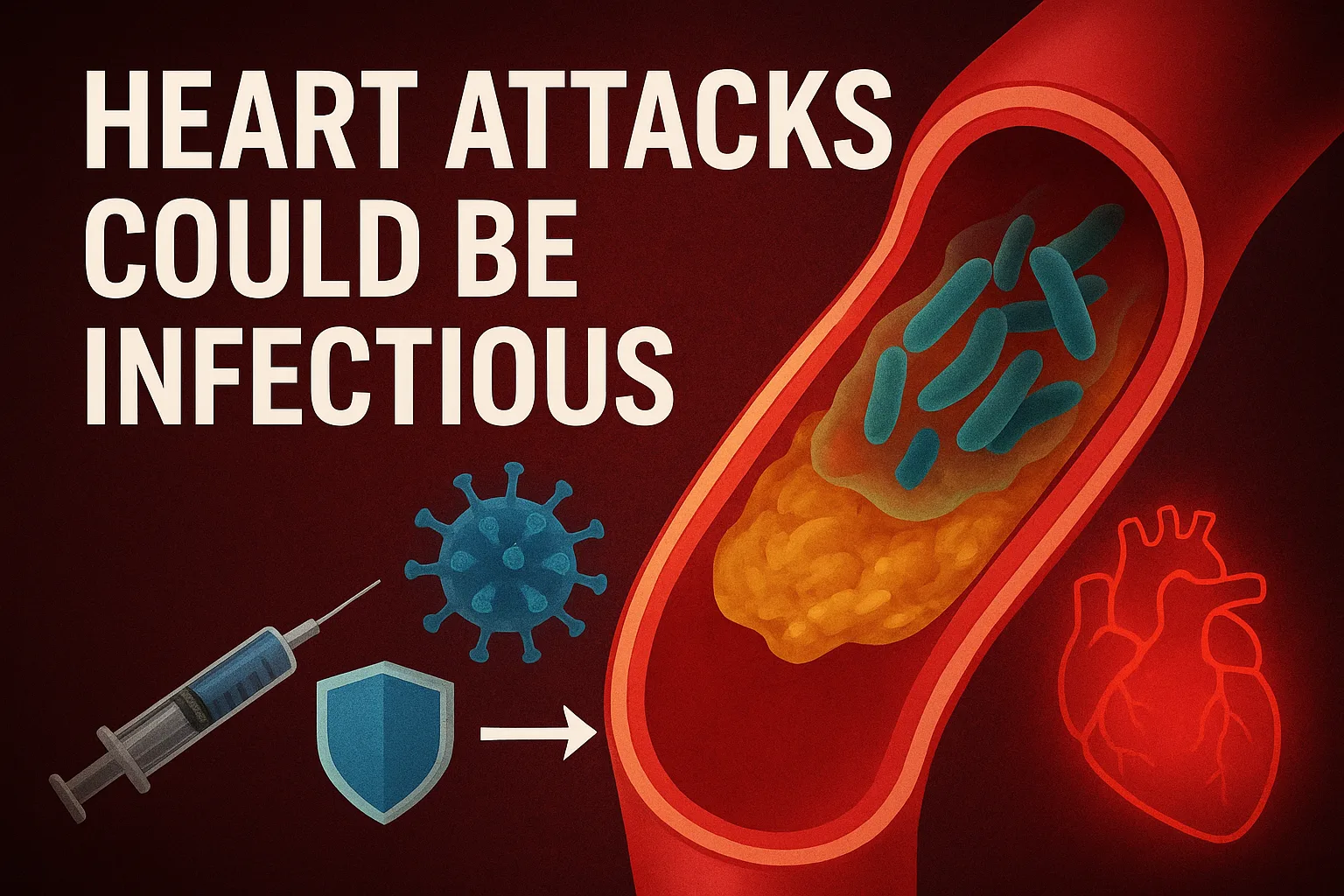
Scientists have uncovered shocking evidence: heart attacks may not be caused only by cholesterol and unhealthy habits—they could actually have an infectious trigger. According to groundbreaking research, hidden bacterial infections in the body may play a key role in sparking deadly cardiac events.
The silent culprit? Bacterial biofilms. These invisible microbial communities can hide for years inside atherosclerotic plaques, embedding themselves in cholesterol deposits within the arteries. Shielded by a dense, jelly-like coating, they remain dormant—untouched by both the immune system and antibiotics. No natural defense can reach them.
But when a virus, infection, or other external trigger strikes, the biofilm “wakes up.” The bacteria begin to multiply, unleashing a storm of inflammation. This immune response can tear through the fibrous cap of the plaque, causing it to rupture. Blood clots form, block circulation—and the result is a sudden, fatal heart attack.
For decades, doctors have blamed oxidized LDL cholesterol as the main driver of coronary artery disease. But lead researcher Professor Pekka Karhunen warns that the truth could be far more complex:
“Bacterial involvement in coronary artery disease has long been suspected, but direct and convincing evidence was missing. Our study has now revealed bacterial DNA from multiple oral microbes inside atherosclerotic plaques.”
Using a targeted antibody, researchers uncovered biofilm structures hiding in arterial tissue. Even more alarming: bacteria released from these biofilms were observed in heart attack cases, where the immune system’s response only fueled further inflammation—accelerating plaque rupture and blocking blood flow.
This discovery opens the door to a medical revolution: if infections can trigger heart attacks, then vaccines might one day prevent them.
The research—carried out by the Universities of Tampere and Oulu, the Finnish Institute for Health and Welfare, and the University of Oxford—analyzed tissue samples from both patients undergoing surgery for severe atherosclerosis and individuals who died suddenly from cardiac arrest.
The study is part of a massive European cardiovascular project spanning 11 countries, and it could fundamentally change how we understand, prevent, and treat heart attacks.
One day soon, a “heart attack vaccine” may no longer be science fiction.