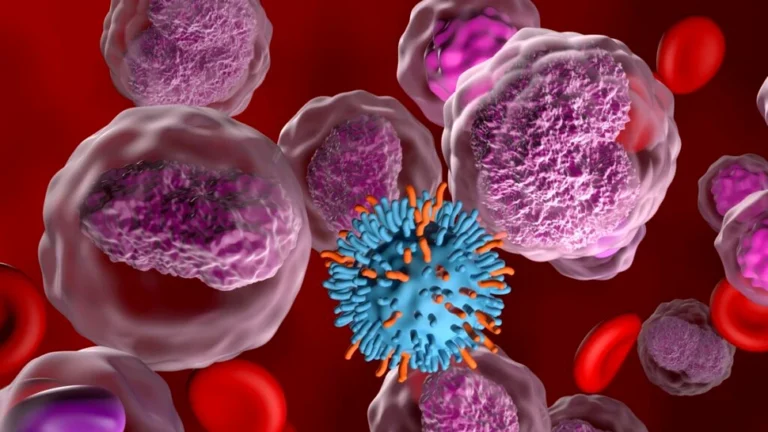
Biocomputers are emerging from the world’s most advanced laboratories, promising a revolution in how we process information. Instead of silicon circuits, these systems use living human neurons capable of learning, recognizing patterns, reacting to stimuli, and consuming only a fraction of the energy required by today’s digital technologies.
This futuristic frontier is driven by an urgent problem: the soaring energy consumption of artificial intelligence and global digital infrastructures.
And if the solution were to use—or even imitate—the most powerful and energy-efficient processor ever created?
The human brain.
Why Biocomputers Are Born: A Massive Energy Problem
The rise of biocomputers began with a stark realization:
- The human brain consumes roughly 20 watts, about the power of a small lightbulb.
- A modern data center can require up to 10 megawatts to perform comparable processing tasks.
The gap is staggering—and increasingly unsustainable.
With the explosion of generative AI, cloud services, real-time analytics, and global platforms, the energy required to sustain this digital ecosystem is approaching critical levels.
Thus emerged a crucial question:
Can we build computational systems inspired by biology—far more efficient and naturally intelligent?
Today, the answer appears to be an exciting yes.
How Biocomputers Are Built: From Skin Cells to Mini-Brains
Biocomputers rely on real human neurons, cultivated and organized into three-dimensional structures that behave like tiny living networks. This is the basic process:
- Harvesting human skin cells
- Reprogramming them into pluripotent stem cells
- Differentiating them into specialized neurons
- Organizing them into 3D clusters known as brain organoids or mini-brains
Despite their name, these organoids are not miniature brains. They:
- lack blood vessels
- have no sensory organs
- do not contain specialized areas (memory, movement, etc.)
- reproduce only some basic cortical functions
But they possess one crucial trait:
they can process information and learn simple patterns.
How Biocomputers Work: Neurons on Microelectrodes
To connect these living structures with digital systems, organoids are placed on a microelectrode array, a thin plate with tiny metallic contacts that act as a bridge between biology and electronics.
The workflow is revolutionary:
- the computer sends electrical pulses → input
- neurons respond with electrical discharges → output
- software analyzes the patterns
- algorithms convert them into usable data
In practice, the neurons act as living computational units.
What Biocomputers Can Do Today
While still experimental, biocomputers have already produced remarkable results.
1. Modeling Neurological Diseases
Brain organoids allow researchers to study:
- epilepsy
- autism spectrum disorders
- neurodegenerative diseases
- drug reactions
All while reducing animal testing in the earliest research phases.
2. Recognizing Complex Patterns (like Braille)
Researchers at the University of Bristol demonstrated that:
- 10,000 neurons can recognize Braille letters
- 30,000 neurons increase accuracy significantly
A striking achievement for such small biological systems.
3. Learning to Play Games (like Pong)
Australian company Cortical Labs trained organoids to play the computer game Pong, rewarding or penalizing their electrical responses.
This marks the first example of trained biological intelligence.
The company has already commercialized a biocomputer for labs and developers at $35,000.
4. Predicting Environmental Phenomena
At the University of California, San Diego, researchers are building organoids with millions of cells, capable of acting as environmental biosensors:
- detecting pollutants
- predicting the spread of oil spills
- reacting to environmental changes in real time
A form of living environmental monitoring tool.
Biocomputers for Rent: The “Biological Cloud”
The Swiss company FinalSpark has created NeuroPlatform, a cloud-accessible network of 16 neuron-based organoids:
- universities: free access
- companies: up to $5,000/month for a dedicated organoid
Essentially, a biological server available via the web.
The Current Limits of Biocomputers
Despite the enormous potential, several major challenges remain.
1. Size
Organoids contain:
- a few hundred thousand neurons
vs - 86 billion in the human brain
2. Limited Lifespan
Organoids survive a few months before internal cells begin to degrade due to insufficient nutrient diffusion.
3. Electrical Instability
As organoids mature, their electrical properties change—making long-term measurements unreliable.
4. Biological Variability
Each organoid differs in:
- composition
- density
- maturation
Which makes standardization nearly impossible.
5. High Costs
Creating, maintaining, feeding, and monitoring living computational systems remains extremely expensive.
Conclusion: A Promising Future, Still Far from Realization
Biocomputers are among the most fascinating technological frontiers of our time.
They open a door to a future where computation could be:
- vastly more efficient
- naturally adaptive
- extremely low-energy
- biologically inspired—or even biologically powered
Yet, despite incredible advances, current biological limits are not enough to replace traditional computers.
As Professor Angela Di Baldassarre notes, biocomputers offer a visionary and exciting direction for research, but decades of work will likely be needed before they become true computational tools.