Betaine
Scientists may be closer than ever to bottling the rejuvenating effects of exercise.
A groundbreaking study published in Cell by researchers from the Chinese Academy of Sciences and Xuanwu Hospital Capital Medical University reveals how the body’s anti-aging response to physical activity is orchestrated — and points to betaine, a kidney-produced metabolite, as a potential oral compound capable of reproducing many of these benefits.
This discovery offers a tantalizing possibility: a safe, natural molecule that could mimic the molecular effects of long-term exercise, opening the door to new therapies that slow aging, reduce inflammation, and improve metabolic and cognitive health.
What Is Betaine and Why It Matters
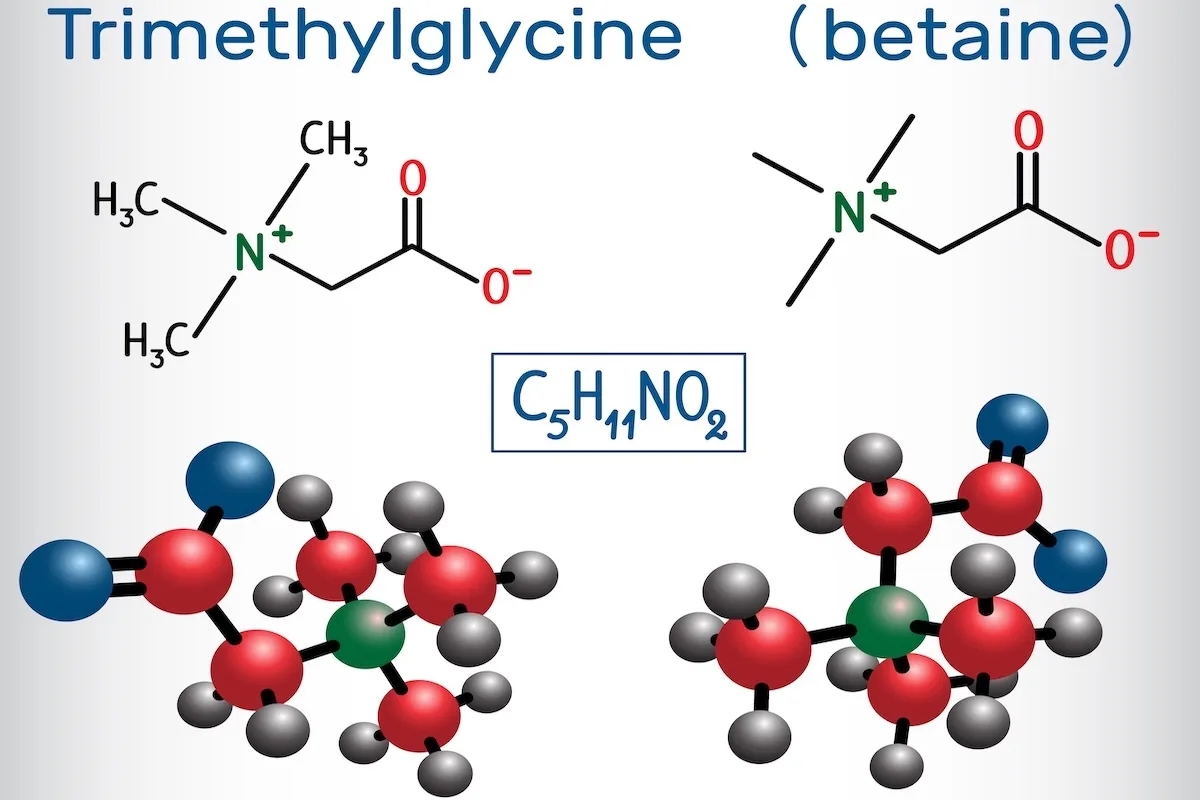
Betaine is a small but powerful molecule naturally present in foods like beets, spinach, whole grains, and shellfish. The human body also produces it internally, but the new research highlights a previously unknown role: betaine acts as a key messenger molecule, coordinating the anti-aging and protective benefits triggered by sustained physical activity.
During long-term training, the kidney emerges as a central “control tower,” dramatically increasing its production of betaine and sending rejuvenating signals throughout the body.
How the Body Reacts to Exercise: A Six-Year Human Study
To unravel the biological mechanisms behind exercise’s anti-aging effects, the research team conducted a six-year longitudinal study involving 13 healthy men.
Using an advanced multiomics approach — tracking genes, proteins, metabolites, and gut microbiota — the scientists examined the body under three conditions:
- At rest
- After a single 5 km run
- After 25 days of regular endurance training
This comprehensive analysis revealed something surprising: the kidney is not just a filtration organ. Instead, it plays a central regulatory role in how exercise reshapes immunity, metabolism, and cellular resilience.
The Kidney’s Hidden Role
During consistent training, the kidney significantly boosts production of betaine, which then:
- Enhances cellular stress resistance
- Improves mitochondrial function
- Strengthens the immune system
- Reduces systemic inflammation
- Helps reverse age-related molecular changes
This kidney-driven betaine surge appears to be a master switch behind many of exercise’s well-known anti-aging benefits.
Solving the Exercise Paradox: Why One Workout Hurts but Long Training Heals
The study also clarifies a long-standing mystery in sports physiology known as the exercise paradox:
- A single intense workout causes temporary inflammation, oxidative stress, and molecular “disorder.”
- Long-term, consistent training produces the opposite effect — improved immunity, enhanced metabolic balance, and stronger resistance to age-related decline.
The researchers found that a short burst of exercise triggers acute “metabolic chaos”, while sustained training restores equilibrium by adjusting everything from gut bacteria to immune cell behavior.
What Long-Term Training Changes
Regular exercise led to:
- Healthier and more diverse gut microbiota
- Stronger antioxidant defenses
- Reversed aging markers in T cells
- Increased stability of DNA
- Epigenetic improvements, including reduced ETS1 expression
- Higher betaine production via the kidney enzyme CHDH
And astonishingly, oral betaine supplementation recreated many of these long-term benefits.
What Happens When You Take Betaine? Many Exercise Benefits — Without the Exercise
When given to aging mice, betaine supplementation produced wide-ranging improvements:
- Enhanced metabolic health
- Improved cognitive performance
- Reduced depressive-like behavior
- Lower systemic inflammation
- Better physical endurance
- Protection against age-related immune decline
These results suggest that betaine acts as a multi-organ rejuvenation signal, similar to the cellular messages released during sustained exercise.
How Betaine Fights Inflammation and Aging
A key finding of the study is how betaine disrupts “inflammaging,” the chronic low-grade inflammation associated with aging.
The researchers discovered that betaine:
- Binds to and inhibits TBK1, a kinase that drives inflammation
- Suppresses the IRF3 and NF-κB pathways, major inflammatory signaling routes
- Reduces cellular stress
- Restores molecular balance in immune cells
This mechanism beautifully links the two phases of exercise:
- Short-term stress activates survival responses (IL-6, corticosterone).
- Long-term training — or betaine — activates the kidney–betaine–TBK1 pathway, promoting youthfulness and resilience.
Because betaine is already considered safe, natural, and effective, it represents a promising candidate for individuals who are unable to exercise due to age, disability, or chronic disease.
As co-corresponding author Dr. Liu Guang-Hui explains:
“This redefines ‘exercise as medicine.’ Our study shows how the body’s internal chemistry can be translated into therapeutic strategies. It opens the door to geroprotective treatments capable of coordinating multiple organs at once.”
A New Frontier in Anti-Aging Medicine
This landmark research positions betaine as a potential geroprotective supplement — a compound that could slow aging by imitating the biological effects of consistent physical activity. While exercise remains irreplaceable, betaine could become a powerful adjunct or alternative for those who cannot train regularly.
With deeper investigation, betaine-based interventions may one day:
- Improve longevity
- Reduce chronic inflammation
- Protect the brain
- Boost immune function
- Enhance metabolic health
- Support healthy aging across multiple organs
The prospect of capturing exercise’s anti-aging magic in a pill is no longer science fiction — and the kidney-powered molecule betaine may be the key to making it a reality.
Source: Higher Education Press