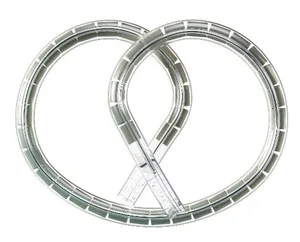
TAR-200 is inserted into the bladder through a brief outpatient procedure, where it remains for three weeks per treatment cycle.
In the battle against bladder cancer, some dates blur into the background … and then there is a breakthrough so bold it demands notice. The novel targeted drug-delivery system TAR-200 has achieved astonishing results in a Phase 2 clinical trial: tumors were eliminated in 82 % of patients with high-risk non-muscle-invasive bladder cancer (HR-NMIBC) who had already exhausted standard therapies. Keck Medicine Newsroom+2JNJ.com+2
Even more impressively, in most of these patients the cancer vanished within three months of therapy, and nearly half remained cancer-free a year later. Keck Medicine Newsroom+1
“This new therapy is the most effective one reported to date for the most common form of bladder cancer,” said Dr. Sia Daneshmand, MD, director of urologic oncology at Keck Medicine of USC and lead author of the study published in the Journal of Clinical Oncology. ASC Publications+2Keck Medicine Newsroom+2
What follows is a deep dive into the device, the trial, its significance — and what it could mean for the future of bladder cancer treatment.
What is TAR-200 and how does it work?
TAR-200 is not just another chemotherapy drug—it’s a novel implantable drug-delivery system. The device is a small, pretzel-shaped implant loaded with the well-known chemotherapy agent Gemcitabine. Through a catheter, the implant is placed directly into the bladder, where it gradually releases Gemcitabine over a three-week period for each treatment cycle. JNJ.com+2ScienceDirect+2
Traditionally, Gemcitabine (like many intravesical therapies) is delivered in a liquid solution that remains for only a few hours in the bladder — limiting its penetration into the bladder wall and reducing its effectiveness. TAR-200 flips that model: by extending local drug exposure, it allows the chemotherapy to act more deeply and persistently within the bladder environment.
Dr. Daneshmand explains: “The longer the medicine sits inside the bladder, the more deeply it would penetrate … And it appears that having the chemotherapy released slowly over weeks rather than in just a few hours is a much more effective approach.” Keck Medicine Newsroom+1
In short: targeted, localised, sustained therapy — which aligns with modern precision oncology thinking.
Trial details: SunRISe-1 and the evidence behind the claim
The pivotal study is the Phase IIb trial named SunRISe-1 (ClinicalTrials.gov NCT04640623). It ran across 144 sites worldwide, including Keck Hospital of USC. Keck Medicine Newsroom+2ASC Publications+2
The trial enrolled 85 patients diagnosed with high-risk non-muscle-invasive bladder cancer (HR-NMIBC) — specifically those who had previously been treated with immunotherapy using BCG (Bacillus Calmette–Guérin (BCG)) and whose disease had returned or persisted. ASC Publications+1
Key results:
- A centrally confirmed complete response (CR) rate of around 82.8 % in the TAR-200 monotherapy cohort — i.e., tumour disappeared as evidenced via urine cytology or biopsy. JNJ.com+1
- By the one-year mark, a substantial portion of responders remained disease-free; median follow-up at data cut-off was about 29.9 weeks. JNJ.com+1
- Safety profile: manageable. Common side-effects included urinary urgency, dysuria, urinary tract infections. Grade 3 or higher adverse events occurred in a minority of patients. JNJ.com+1
The data mark a major milestone in a disease setting where options have historically been limited.
🎯 Why this matters: The unmet need in bladder cancer
Bladder cancer is among the more common cancers worldwide. Most newly diagnosed cases (~75-85 %) are non-muscle-invasive at first: the cancer remains confined to the bladder lining, not invading the muscle wall. JNJ.com+1
However, when such non-muscle-invasive cancers are high-risk, meaning they carry a higher likelihood of recurrence or progression to muscle-invasive disease, standard therapies have significant limitations. The frontline intravesical therapy for decades has been BCG immunotherapy. But for 30-40 % of patients, BCG fails or the disease recurs. JNJ.com
For many of those patients, the only remaining curative option has been radical cystectomy (removal of the bladder and surrounding tissue) — a major surgery that greatly affects quality of life. TAR-200 offers a bladder-sparing alternative, one that could radically reshape the standard of care in HR-NMIBC.
Strong results, fewer side-effects
The appeal of TAR-200 is twofold: its efficacy and its tolerability.
- In the TAR-200 monotherapy cohort: 70 out of 85 patients achieved complete tumour disappearance. Keck Medicine Newsroom
- Nearly half of patients were still cancer-free at one year. Keck Medicine Newsroom
- Minimal serious adverse events: The implant procedure is brief (3-5 minutes, catheter-based), no general anesthesia required in many cases. JNJ.com
- Because the drug resides locally in the bladder, systemic toxicity is reduced compared with many intravenous chemotherapy approaches.
This combination of powerful response and manageable side-effect profile makes TAR-200 a highly promising candidate for reshaping the treatment paradigm.
What’s next: Slow-release therapies and the future of treatment
TAR-200 is part of a broader wave of innovation in oncology: localised, controlled, slow-release drug delivery systems. These are designed to maximise anti-tumour activity at the site of disease while minimising systemic exposure and toxicity.
Dr. Daneshmand reflects: “Our mission is to deliver cancer-fighting medications into the bladder that will offer lasting remission from cancer, and it looks like we are well on our way toward that goal.” Keck Medicine Newsroom
Furthermore, regulatory momentum is building: the U.S. Food & Drug Administration (FDA) has granted TAR-200 a Priority Review of its New Drug Application. JNJ.com+1
The coming years will see whether TAR-200 moves into Phase III trials, gains full approval, and becomes widely available — but the trajectory is clear: we may be witnessing a paradigm shift in bladder cancer care.