Some dates slip by unnoticed on the calendar, and then there’s Friday the 13th — a day that, even when simply mentioned, stirs superstition, fear, and fascination.
For some, it’s just another day; for others, it triggers unease, anxiety, and even terror.
But where does this belief that Friday the 13th brings bad luck really come from? Is it just a myth, or is there something deeper behind it?
The Origins of the Unlucky Number: Why 13 Spells Trouble
The number 13 has carried an aura of misfortune for centuries. The fear of it even has a name — triskaidekaphobia — an ancient and widespread phobia rooted in religious and cultural traditions.
In Christianity, the story goes back to the Last Supper, where 13 people sat at the table — and the thirteenth, Judas, was the betrayer.
In Norse mythology, the trickster god Loki was the thirteenth uninvited guest at a divine banquet, bringing chaos and causing the death of Balder, the god of light and purity.
Meanwhile, the number 12 has long been seen as perfect and complete — 12 months, 12 apostles, 12 zodiac signs. The 13th element breaks that harmony, symbolizing chaos, imbalance, and bad luck.
Over time, this belief became deeply ingrained across cultures, giving the number 13 a lasting dark reputation.
The Cursed Day: How Friday Became a Symbol of Misfortune
The day Friday itself hasn’t escaped superstition either.
In Christian tradition, Friday is associated with the Crucifixion of Jesus Christ, a day of suffering and sacrifice.
Medieval legends (with no direct biblical basis) even claim that Eve tempted Adam on a Friday, and that the Great Flood began on this day.
In medieval England, Fridays were often chosen for executions, strengthening its unlucky image.
Yet not all cultures see it negatively: in Islam, Friday (Jumu’ah) is the holiest day of the week, and for the Romans, it was dedicated to Venus, goddess of love and beauty.
The contrast reveals how our sense of “bad luck” is shaped more by belief than by fact.
When Superstition Doubles: The Birth of Friday the 13th
Surprisingly, the combination of Friday + 13 is a modern superstition.
It didn’t become widespread until the 19th century, largely thanks to the 1907 novel Friday the Thirteenth by Thomas W. Lawson.
In the story, a shrewd Wall Street broker exploits people’s fear of the date to crash the stock market — a concept that captured the public imagination during an era of financial instability and crises.
From that point on, the myth spread rapidly, fueled by coincidence and reinforced by history.
The Events That Cemented the Friday the 13th Legend
Throughout history, certain tragedies that happened on this date have added fuel to the legend:
- October 13, 1307 – King Philip IV of France ordered the arrest of the Knights Templar, marking the start of their downfall.
- November 13, 1970 – A catastrophic cyclone struck Bangladesh, killing over 300,000 people.
- October 13, 1972 – Uruguayan Flight 571 crashed in the Andes, inspiring the film Alive.
- January 13, 2012 – The Costa Concordia cruise ship disaster off the Italian coast shocked the world.
Coincidence or fate? Either way, these events reinforced the sinister reputation of Friday the 13th.
Famous Fears: When Even Geniuses and Icons Avoided Friday the 13th
Superstition doesn’t discriminate. Even famous historical figures have shuddered at the thought of Friday the 13th.
U.S. President Franklin D. Roosevelt avoided traveling or dining with 13 guests.
Mark Twain refused dinner invitations with 13 attendees, and Napoleon Bonaparte reportedly postponed key decisions falling on the date.
Even great minds like Nikola Tesla and Albert Einstein were uneasy about the number 13, though they rarely admitted it publicly.
In sports, Pelé refused to wear the number 13 jersey, believing it brought misfortune.
And superstition continues today — many airlines omit gate 13, and countless hotels skip the 13th floor altogether.
The Psychology Behind the Fear: How Our Minds Create the Curse
Why does this myth still hold power in an age of science and reason?
The answer lies in psychology.
Our brains fall victim to confirmation bias — we notice and remember bad things that happen on Friday the 13th while ignoring ordinary or positive events.
This selective memory reinforces the illusion that the day is cursed.
Then there’s the self-fulfilling prophecy: when people expect bad luck, they become anxious and cautious, often making mistakes that seem to “prove” the superstition right.
In short, our fear creates its own misfortune.
Friday the 13th in Pop Culture: From Myth to Modern Obsession
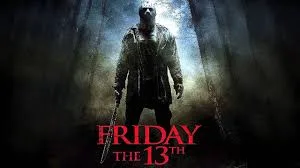
Movies and media have turned Friday the 13th into an icon of horror.
From the cult classic Friday the 13th film series to countless references in books, shows, and memes, the myth lives on — thrilling, scaring, and entertaining new generations.
Ultimately, Friday the 13th is more than just a date. It’s a reflection of our deepest psychological fears — our urge to find meaning in randomness and to explain chaos with superstition.
The Real Mystery Isn’t the Date — It’s Us
Maybe Friday the 13th isn’t cursed at all.
Maybe it’s our own fear of the unknown that gives it power.
Superstitions are stories we tell ourselves — and their strength lies in how much we believe them.
So, next time the calendar shows Friday the 13th, don’t shy away.
It might just be the perfect day to prove that luck isn’t in the numbers — it’s in how we face them.