Invisible Invaders: How Microplastics Could Be Changing Your Brain and Gut
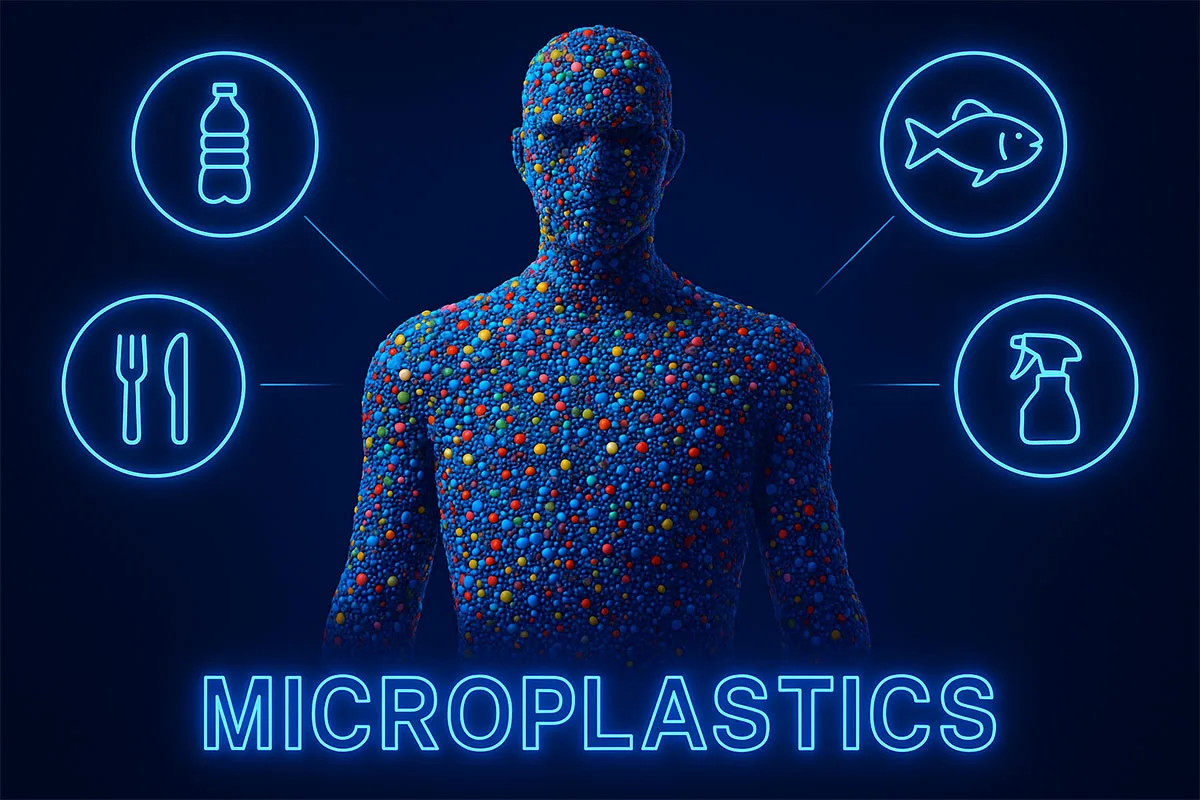
Microplastics — those tiny plastic fragments shed from packaging, clothing, tires, and even paint — have infiltrated nearly every corner of our planet. But now, scientists are uncovering a disturbing truth: these microscopic particles are also invading the human body.
They’ve been detected in our blood, lungs, placentas, and even in the human brain. One study estimated that our brains alone could harbor up to five grams of microplastics — roughly the weight of a teaspoon.
And the story gets even more alarming.
A new study led by Dr. Christian Pacher-Deutsch from the University of Graz, Austria, suggests that microplastics may be altering the delicate balance of the gut microbiome — the community of bacteria that keeps our digestion, immune system, and even our mental health in check.
Researchers exposed gut microbes from five healthy volunteers to five common types of microplastics. The results were startling: the structure of the bacterial communities changed, and so did the chemical compounds they produced. Some of these changes mirrored patterns seen in people suffering from depression and colorectal cancer.
“While it is too early to draw firm conclusions, the microbiome plays a central role in health, from digestion to mental state. Reducing exposure to microplastics, where possible, is a wise measure,” said Dr. Pacher-Deutsch, according to The Guardian.
Microplastics Found in Almost Every Organ
Microplastics are constantly released from packaging, textiles, cosmetics, and car tires. Many are so small that they can pass through the walls of the gut or lungs and enter the bloodstream, spreading to vital organs — including the brain.
“Microplastics are present in almost all tissues studied, and the accumulated levels today appear much higher than 20 years ago,” explains Dr. Jaime Ross, neuroscientist at the University of Rhode Island.
Ross was among the first to show how these particles can affect the brain. In experiments on mice, animals that drank microplastic-contaminated water showed behavioral changes, becoming anxious and losing natural protective responses. Scientists later discovered that microplastics had reached every organ — including the brain, where they reduced a protein essential for neuronal health. The resulting pattern resembled those seen in depression and dementia.
Microplastics Linked to Dementia and Heart Disease
Recent studies on humans are deepening the concern. Microplastics have been found in the brains of dementia patients and in the arteries of people with heart disease, potentially raising the risk of heart attacks and strokes.
Despite growing evidence, experts say there’s still no known safe level of exposure.
“We know there are plastic particles in the blood, but we don’t yet know whether they are harmful, how they work, or how different they might be from each other,” warns Professor Stephanie Wright of Imperial College London.
A Silent Threat Inside Us
The full effects of microplastics on human health remain a mystery — but the evidence so far paints a worrying picture. As these invisible invaders accumulate in our bodies, scientists are urging us to rethink our use of plastic and to reduce exposure wherever possible.
Because the truth is clear: the plastic problem is no longer just environmental — it’s personal.