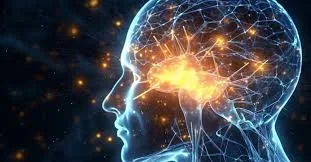
The Brain That Creates Reality: Science Unveils How Illusions Are Born
Have you ever had the feeling of seeing something that wasn’t there? A moving shadow, a nonexistent outline, an illusion that comes to life right before your eyes? Science is finally unlocking the mystery of how our brain doesn’t just record reality, but actively constructs it. A new groundbreaking study published in Nature Neuroscience takes us into the heart of this process, proving that our perception is a creative act, not a simple reproduction of the world.
The “Creator” Neurons of Illusions
Until recently, it was thought that our brain functioned like a camera, simply capturing sensory stimuli. But researchers at the University of California, Berkeley, in collaboration with the Allen Institute, have flipped this idea on its head. Using mice as a model, they identified a specific neural circuit and a type of cell called IC encoder neurons, which are fundamental to the perception of illusions.
These special neurons don’t just receive visual signals; they are designed to complete patterns and “see” things that aren’t really there. They receive instructions from the brain’s higher visual areas, which create a representation of the illusion and send it back to the primary visual cortex. This is where the IC encoder neurons come into play, acting as a filter that transforms raw sensory inputs into a complete image, even if it’s based on missing or nonexistent information.
The Ultimate Proof: Turning on Illusions with Lasers
To demonstrate this fascinating hypothesis, the researchers took a bold step. They exposed mice to illusory images, recording their brain’s electrical activity. Then, with a cutting-edge technique called two-photon holographic optogenetics, they did something extraordinary: they directly stimulated the IC encoder neurons using lasers, even when there was no visual illusion present.
The result was astonishing: the mice’s brain activity reproduced the exact same patterns that had occurred in the presence of the real illusion. In practice, the researchers “turned on” an illusion in the mice’s minds simply by activating the right neurons.
A Step Forward for Science and Our Understanding of the Brain
This revolutionary discovery not only unlocks the secrets of illusions but also has profound implications for understanding disorders like schizophrenia, where the perception of reality can be altered.
The study was made possible thanks to a unique program, the Allen Institute’s OpenScope, which allowed the researchers access to sophisticated equipment to record brain activity with millimetric precision. This collaboration provided an unprecedented view of the brain’s “feedback loop,” showing that our perception is not a linear, passive process.
In conclusion, our vision is much more than a camera that faithfully reproduces the world. It is a dynamic and incredibly complex system, a monitor that constructs and interprets reality based on calculations, past experiences, and at times, the ability to create an illusion. Our brain doesn’t just see; it creates the reality we perceive.