The Cream That Could Erase Scars: A Breakthrough Discovery from Australia
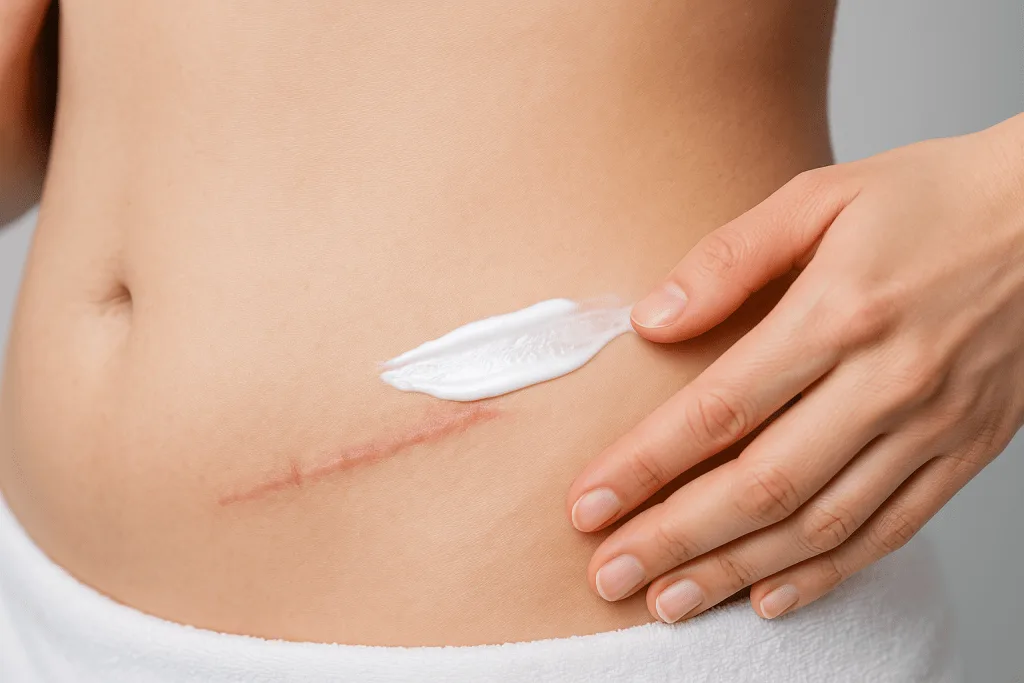
Scars are permanent reminders of the past—whether from surgery, accidents, or skin conditions like acne. For some, they’re marks of resilience. For many others, however, scars are an unwanted burden, both aesthetic and psychological. This leads people to spend fortunes on treatments that rarely deliver: corrective makeup, laser sessions costing thousands of dollars, or over-the-counter creams and gels that often have little to no effect, especially on hypertrophic scars and keloids—the raised, stubborn scars that grow beyond the edges of the original wound.
Now, a potential breakthrough may be on the horizon. A group of Australian researchers is developing a new experimental cream that could fundamentally change how we treat scars.
A Pioneering Research Effort
A team from the University of Western Australia and the Fiona Stanley Hospital has conducted a clinical study on a compound called PXS-6302 (also known as SNT-6302), created by the Australian biotech company Syntara. The results were promising enough to be published in Science Translational Medicine, one of the world’s leading scientific journals.
The cream works in a novel way: it blocks the enzyme lysyl oxidase, which normally plays an essential role in tissue repair. Unfortunately, this same enzyme also promotes the stiff collagen cross-links that create raised, fibrous scars. By inhibiting it, the cream disrupts that process, allowing the skin to heal in a smoother, flatter, and more natural way.
The First Results
Early findings are encouraging. Patients treated with the ointment showed visible improvements: scars became flatter, less noticeable, and the skin regained a softer, more elastic appearance. This isn’t just a cosmetic illusion—it represents a biological change in the way skin heals.
If confirmed by larger studies, PXS-6302 could become the first truly effective treatment for old, raised scars, a milestone long sought in dermatology and plastic surgery.
A Potential Social and Medical Game-Changer
The implications are vast. Millions of people worldwide live with scars that affect not only their physical appearance but also their mental health and social confidence. For those with scars in visible areas—such as the face—the psychological toll can lead to isolation, diminished self-esteem, and even depression.
The medical and cosmetic industries could also see a revolution: burn units, reconstructive surgeons, and everyday people battling acne scars or post-surgical marks may soon have access to a treatment once thought impossible.
Hope with Caution
There is, however, an important caveat: the study was funded by Syntara, the very company behind the cream. That means independent studies will be essential to validate the findings. Additionally, larger and longer-term clinical trials are required to confirm both the safety and effectiveness of the treatment.
Even with those caveats, the excitement in the scientific community is undeniable. For the first time, the vision of skin that heals without permanent scars feels less like science fiction and more like an imminent reality.